Building for the next generation: Keeping Family Close on the Land

In rural New Zealand, a home is more than timber and cladding, it’s the anchor of the land. It’s where muddy gumboots end up by the door, where family stories get passed down, and where generations stay connected to the place they call home.

For many rural families, the future isn’t about moving away. It’s about creating room for the next generation to stay close.

Kids taking over the farm. Grandkids exploring paddocks out back. Whānau living nearby without living on top of each other.

That’s where thoughtful, practical design makes all the difference.
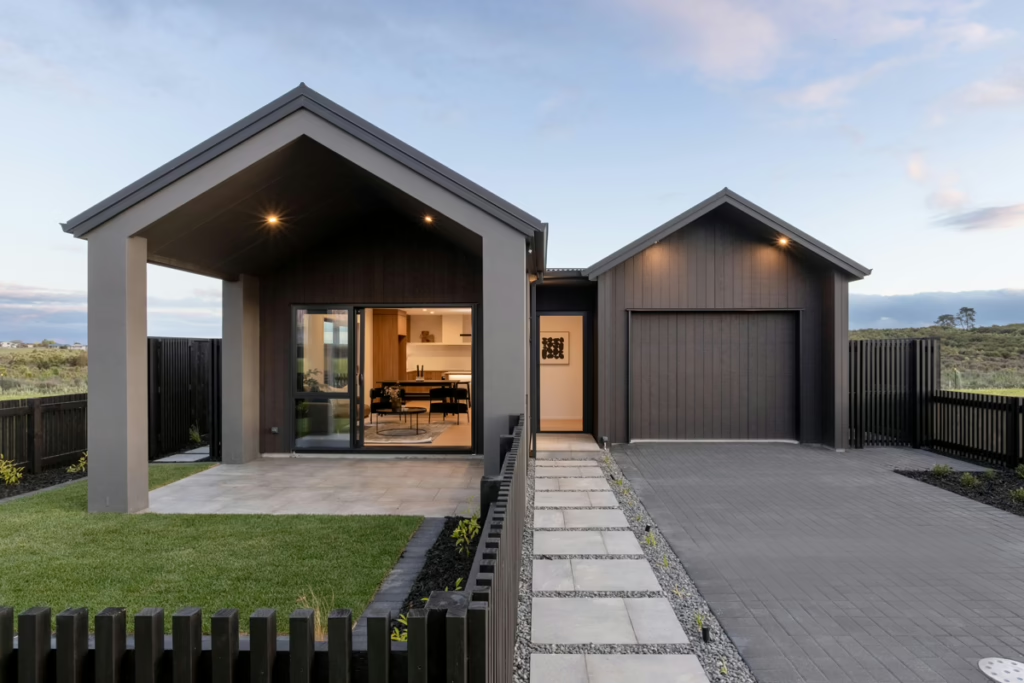
Building for what matters

Rural living demands a home built for real life. One that can handle the weather, the workload, and the pace that comes with living on the land.

It’s not about showhome flashiness.
It’s about warmth, layout, durability, and a sense of belonging to the land beneath it.

At Affordable Builders, we’ve been building across rural New Zealand for over 10 years, and one thing has never changed: no two rural builds are ever the same. Every site, every family, every farm, each project needs a home that fits its people and its environment.

Because when you build rural, you’re not just planning for today.
You’re building a legacy for the next generation.

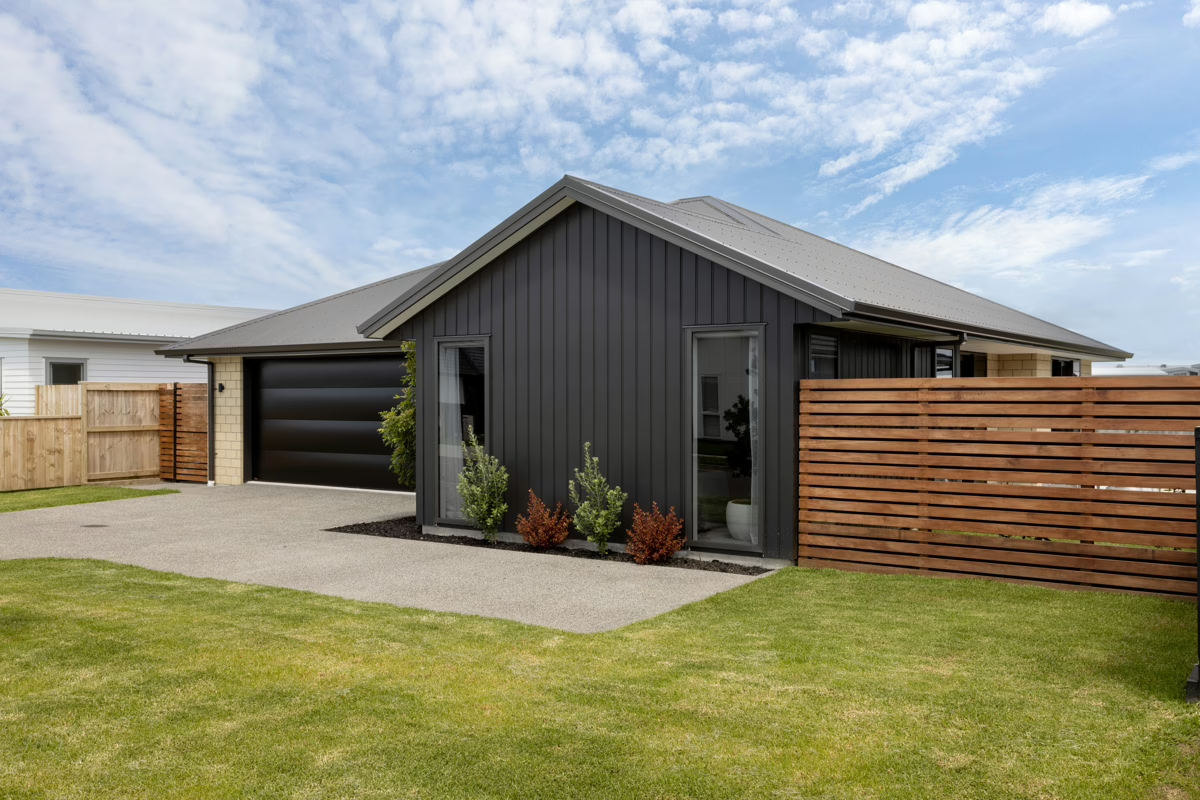
The Hotham – solid, timeless, and built for country life

For families who’ve spent years working their land and want a home that reflects that pride, The Hotham delivers exactly what rural living demands.

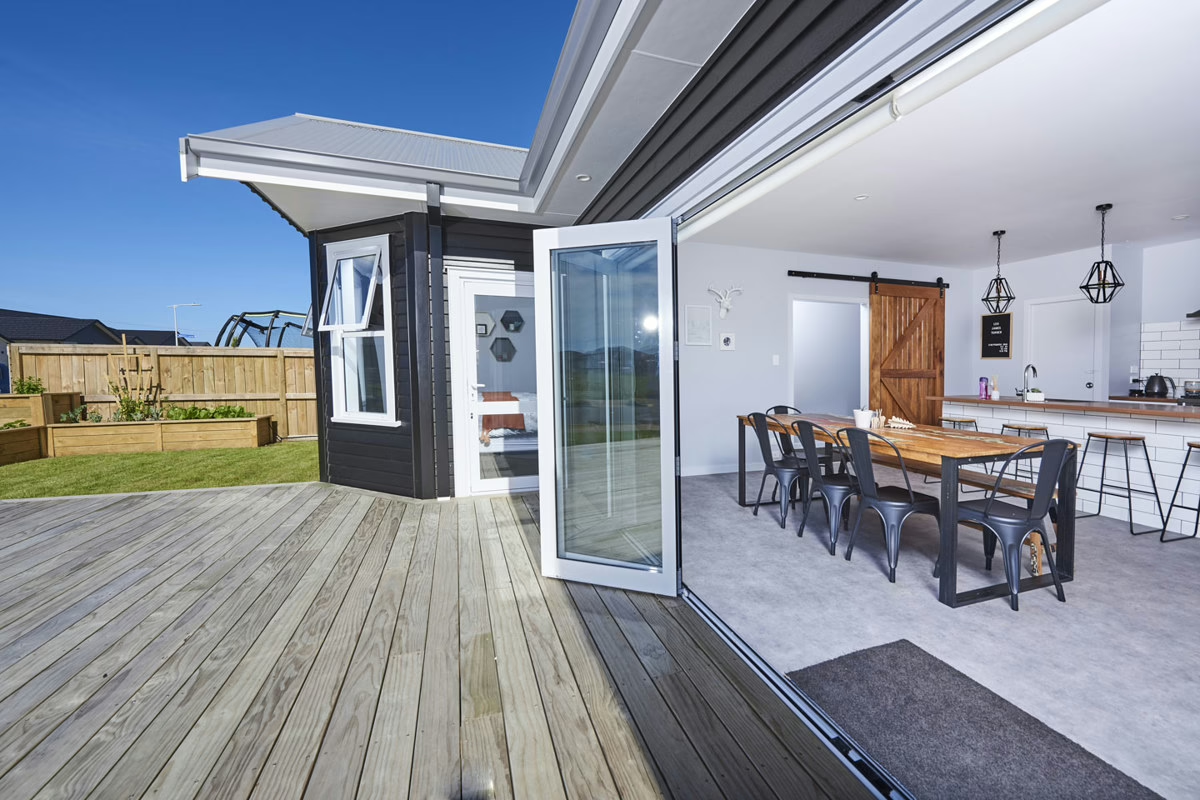
Spacious. Functional. Open-plan living that brings everyone together. Smart storage for all the everyday gear that comes with farm life.

Every feature is designed to make life easier, and to last.
It’s the kind of home that will still feel right when your kids are welcoming their kids through the door.

The Robinson – extra space made simple

The Robinson is the straightforward, low-fuss option for families who need extra space, whether it’s for whānau, farm workers, or visitors.

Simple. Comfortable. Strong.
Built to withstand busy days, muddy boots, and the nonstop rhythm of rural living.

Many families place The Robinson close to the main home, close enough to stay connected, yet with enough privacy for everyone to live comfortably.

The Chestnuts – real families, real results

When Megan and Kerry Chestnut built with Affordable Builders in Whangārei, they wanted something practical, warm, and efficient, a home that supported their rural lifestyle rather than complicated it.

“You’re not dealing with surprises during the build, because everything’s planned properly. But you still get the flexibility to work within your budget.”

Their experience proves that building in rural areas doesn’t have to be stressful, not when you’ve got a team who understands the land, the lifestyle, and the people who live it every day.

Read more stories from our clients at affordablebuilders.co.nz

Homes that belong

Keeping family on the land isn’t just about convenience, it’s about connection.

It’s about passing on what you’ve built, staying close to the people who matter, and creating homes that will stand strong for decades.

That’s what we build for.
No shortcuts. No sales pitch. Just well-built homes that belong exactly where they’re placed — on the land that raised you.

Affordable Builders has been helping rural Kiwi families create homes that fit their lifestyle for over 10 years.
If you’re planning your next build, for family, workers, or your own future, our team is here to help.

Learn more at affordablebuilders.co.nz

FAQs: Building on Rural Land

What makes building rural different from building in town?

Rural builds need more planning. Access for trucks, connecting services like water and power, and designing a home that suits the land, wind, slope, and weather. It’s a mix of experience and practicality, not just good-looking plans.


Do I need special consent to build on rural land?

Sometimes. It depends on zoning, existing structures, septic systems, and access roads. Don’t worry, we’ll guide you through what’s required before you begin.


Can you help with farm accommodation or extra dwellings?

Absolutely. Whether you need whānau accommodation, housing for farm workers, or a second dwelling, we can design something that fits your property and your budget, including plans similar to our Robinson layout.


What house designs work best for rural families?

Strong layouts with open living, plenty of storage, and durable materials. Homes like the Hotham give families space without unnecessary complexity. It’s all about flow, warmth, and longevity.


Can I use my own land for the build?

Yes, definitely. If you already own the land, we’ll meet you onsite for a full assessment, checking orientation, slope, wind, services, and more, to design a home that fits naturally with your block.


What’s the first step?

Simple, just get in touch.
We’ll visit your site (or help you find one), talk through your ideas, and give you a clear plan for what’s possible.
No pressure. No jargon.
Can you really build with just 10%?

Buying your first home can feel like a massive leap, especially when you’re balancing rent, rising costs, and everyone’s opinion on what you should be doing.

And while we can’t do anything about Uncle Kev’s classic “back in my day…” lectures, we can share something that might actually change things for you:

You might be able to build your first home with just a 10% deposit.

Yep, not 20%, not some magic number you’ll never catch up to.

Just 10% down, and you could be on your way to building your first home.

Most People Don’t Even Know This Is Possible

A lot of first-home buyers assume the whole thing is out of reach. So they keep saving, keep waiting, and keep watching the market move.

But what if building wasn’t just possible…
What if it was actually easier?

  • No stressful auctions
  • No scary renovation blowouts
  • Fixed-price build contracts that make lending simpler
  • And yes, Affordable Builders House + Land packages that work with just 10% down

You don’t need everything figured out, you just need to know this pathway exists.

How the Money Works (Without the Financial Jargon)

When you build, there are two popular ways the payment side is structured. Here’s the simple, plain-English version:

Progress Payments

Your home is built in stages, and your bank releases funds at each step, slab, framing, roof, etc.
You only pay for what’s been completed.
Since you’re paying as the build progresses, you avoid covering the interest a builder would take on if they financed the whole thing first.
Translation: it’s the more affordable option overall.

Turnkey

This one’s the go-to for many first-home buyers.
You pay the deposit now, and nothing else until the home is completely finished.
Turnkey is popular with investors and off-the-plan buyers who want simplicity and zero surprises.

Either way, you don’t need a huge pile of cash upfront, and you’re not stuck paying rent and a full mortgage at the same time. The structure can flex around your financial situation.

What Do Banks Actually Want?

Honestly, it’s not as intimidating as people make it sound.

Most lenders simply want:

  • Around a 10% deposit
  • A fixed-price build contract (we sort that for you)
  • Proof of your income and expenses
  • Plans and consents (already part of the process)

Many banks prefer new builds because they’re efficient, healthier, and less likely to come with expensive surprises.

Building Might Be Your Best Move

Maybe you ruled out buying because it felt impossible.

Maybe you never even looked into building.

But now you know:
It’s doable. It’s realistic. And for a lot of buyers, it’s the smartest path into the market.

No disrespect to Uncle Kev… but this is the kind of advice worth paying attention to.

FAQs

Can I really build with just a 10% deposit?

In many cases, yes. Lenders often accept 10% for new builds, depending on your income and the build contract. It’s a realistic option for heaps of first-home buyers.

Is building more expensive than buying an existing home?

Not always. Fixed-price builds mean no auctions, no reno surprises, and no hidden repair costs. New homes are more efficient and cheaper to run long-term.

What’s the difference between progress payments and turnkey?

  • Progress payments: Loan is released in stages as the build progresses.
  • Turnkey: Deposit now, and nothing more until you get the keys.
    Both options work — it just depends on your financial setup.

What help can Affordable Builders give me?

We guide you from the first conversation to the final handover.
We can connect you with trusted lending professionals, create a fixed-price contract, and manage the build from start to finish.

Learn more or start your journey at affordablebuilders.co.nz

From renovation headaches to fresh starts: the Kiwi trend growing fast

If your home isn’t doing the job anymore, you’ve probably had that debate:
Do we renovate… or do we just start again?

On paper, renovating looks like the “easy” option.
Stay in the same neighbourhood, tidy things up, a bit of paint, maybe a new splashback… done.

But let’s be honest, it’s never just a bit of paint.

It’s months of dust settling in places dust was never meant to be.
It’s strangers stomping through your lounge.
It’s a kitchen sink balanced on whatever you can find.
And it’s a budget blowing out because the wiring’s ancient, the roof’s sagging, and the bathroom floor is hiding more secrets than a forgotten kūmara in the veggie bin.

That’s why more and more Kiwis are ditching the reno stress and choosing to build new, with a fresh layout, modern comfort, and zero compromises.

Why Building New Makes Sense (and not just for Pinterest addicts)

Building new isn’t about chasing trends or creating a “don’t touch anything” show home.
It’s about building smarter — a home that fits how you actually live.

1. You get exactly what you want, no compromises

Renovating is like trying to bake a pav without eggs — you can try, but it’s never quite right. 🍰
Starting new gives you total freedom: layout, storage, sunlight, flow — all designed around your lifestyle, not someone’s 1998 design trend.

2. Plan for today, and for the next chapter

Whether you’re future-proofing with a single-level home or want a second lounge to keep the kids contained (and quiet), a new build lets you design for the next 5–10 years, not just tomorrow.

3. Less maintenance, more comfort

A brand-new home is warm, dry, energy-efficient and built to today’s standards.
No mystery leaks.
No “we’ll patch that later.”
No drafts that feel like the Cook Strait crossing.

4. Clarity on cost and timeline

With a fixed-price build contract and a clear timeline, you know exactly what you’re in for.
No “surprise” extras, and no tradies disappearing because someone else’s reno exploded.

Downsizing Without Actually Downsizing

Going smaller doesn’t mean giving up comfort, it means upgrading how you use your space.

A well-designed floor plan can make a smaller home feel spacious and easy to live in.
Who needs that extra lounge no one sat in anyway?

Learn more here:
Right-Size Your Life: Smarter Home Design for Modern Living

How to Make the Process Stress-Free

Building new is more than a solution, it’s a full upgrade.
You get the comfort, the layout, and the lifestyle you want… without the drama of fixing someone else’s DIY “masterpiece” from 2004.

A few tips to keep things smooth:

Choose a builder who actually listens — your home should fit you, not a standard plan
Make a clear list of needs vs. nice-to-haves — it keeps choices simple and budgets tidy
Plan your move smartly — yes, you can sell and build without crashing with the in-laws

Learn about finance options here:
Building Finance Explained: Turnkey vs Progress Payments

we specialise in building exceptional homes for Kiwi families.

Get started on your dream home journey today with affordable builders.

our affiliates